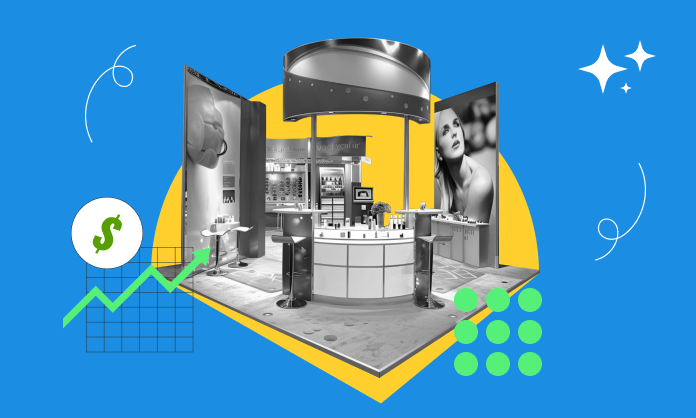
A lot of companies spend thousands on trade shows and still leave wondering what exactly they paid for.
The booth looked good. The team showed up. People walked by constantly. And somehow the event still produced:
- weak leads,
- random conversations,
- exhausted staff,
- boxes of leftover brochures, and
- one stressed marketing manager trying to justify the budget afterward.
That happens more often than companies admit.
Because trade shows are not just about “showing up.” They are operational events. And honestly, the businesses that get real results usually prepare long before the event floor even opens.
The companies that do a good job at it?
You can spot them immediately by Day 2 – Usually tired, slightly chaotic, and wondering why nobody important stopped at the booth.
On that note, today I’m going to breakdown how to prepare for a trade show efficiently.
Stay tuned.
How To Prepare For A Trade Show Without Wasting The Entire Opportunity?
In this section, I’ve discussed how to prepare for a trade show in detail.
Please note that I’ve broken down the entire preparation part of things into 12 steps to give you better clarity on how to run things.
Step 1: Decide What The Trade Show Is Actually Supposed To Do
This sounds obvious, but it is not.
So, a shocking number of businesses attend trade shows with goals so vague that they become impossible to measure afterward.
That means nothing operationally. Moreover, a good trade show strategy starts with one clear priority.
For example, it could be
- lead generation,
- partnership building,
- launching a product,
- meeting distributors,
- brand awareness,
- closing sales,
- media exposure,
- Recruiting, or
- client retention.
This is because preparation changes completely depending on the objective.
Also, a booth built for high-volume lead capture should not operate the same way as a booth focused on high-value enterprise conversations.
Yet companies constantly blur those together.
As a result, if you are doing it for the first time, be careful. For exhibitors using a flexible booth structure, early rental booth planning for trade shows helps align the layout, graphics, staffing plan, and show-site logistics before the event begins.
Also, consider doing some thorough research. Without the right planning, the execution will fall apart.
Step 2: Avoid Preparation Failures
Most trade show problems start before the event, not during it. Moreover, preparation failures create most of the stress later, including:
- late booth production,
- unclear staffing,
- shipping mistakes,
- weak messaging,
- bad scheduling,
- missing materials,
- exhausted teams, and
- poor lead handling.
And honestly, trade shows punish disorganization aggressively because everything happens fast once the event starts.
Also, there is no time to “figure it out later” while standing inside a crowded expo hall.
Step 3: Your Booth Needs One Clear Message
To be fair, your booth needs just one message, not twelve. Moreover, trade show attendees process booths extremely quickly while walking.
So, if people cannot understand who you are, what you do, or why it even matters, then within a few seconds, many simply keep moving.
This is where companies overload booths with:
- paragraphs of text,
- technical jargon,
- endless bullet points,
- giant product lists, and
- corporate language nobody reads.
The best booths usually communicate one strong idea clearly. And why not? Simple beats crowded almost every time now.
Step 4: Train The Booth Team Properly
This gets ignored constantly.
Companies obsess over booth design while forgetting that the staff experience determines whether conversations actually convert.
And unfortunately, bad booth behavior is incredibly common at trade shows:
- staff staring at phones,
- eating visibly inside the booth,
- clustering together socially,
- aggressively attacking passersby,
- looking exhausted, and
- sounding scripted.
The worst part? Attendees notice all of it immediately.
As a result, understand that good booth staff should know the company’s message, your product positioning, the conversation flow, qualification questions, the lead-handling process, and the event goals.
And honestly, people respond better to normal human conversations than robotic sales pitches now.
Step 5: Do Not Wait Until The Event To Start Networking
This mistake costs companies huge opportunities. So, even before arriving, a lot of attendees already plan meetings, schedules, booth visits, and networking conversations.
Moreover, businesses preparing properly usually start outreach weeks before the event, through email, LinkedIn, industry groups, and appointment scheduling, especially for larger trade shows.
Otherwise, companies end up hoping random foot traffic magically produces all the important conversations. Sometimes it works, usually not consistently.
Step 6: Trade Show Logistics Become More Annoying Than Expected
Every experienced exhibitor eventually learns this painfully.
- Shipping delays.
- Missing cables.
- Broken displays.
- Internet problems.
- Power issues.
- Late setup windows.
Trade shows create weird operational chaos constantly. That is why preparation matters so much.
Also, experienced teams usually build:
- backup plans,
- extra equipment,
- duplicate materials,
- contingency time, and
- emergency supplies.
These come in handy when you face major or minor logistical problems in the convention center.
Step 7: Lead Capture Systems Matter More Than Brochures
This changed dramatically over the years.
People rarely want heavy printed materials anymore unless they are genuinely useful. But what matters more now is capturing contact information properly while conversations happen.
And surprisingly, many companies still handle this terribly.
Also, leads get lost, forgotten, mixed together, and never followed up on, which quietly destroys event ROI afterward.
A smooth lead capture process matters far more than another branded tote bag that most people throw away at the hotel later.
Step 8: Follow-Up Timing Changes Everything
This is where many trade show opportunities quietly die.
The event ends, and everybody travels home exhausted. Then follow-ups get delayed for one week, two weeks, and sometimes longer.
By then, attendees barely remember half the booths they visited. However, good trade show preparation includes post-show preparation too.
And that means follow-up templates, CRM organization, lead prioritization, outreach scheduling, and sales coordination before the event even begins, because trade shows do not end when the convention center closes.
That is usually when the actual conversion work starts.
Step 9: Booth Design Should Support Conversation
Honestly, your booth should create the space to have conversations – it should not just be aesthetically pleasing.
Some booths look visually impressive while functioning terribly for actual interaction.
For example, blocked entry points, awkward layouts, nowhere to sit, overwhelming screens, excessive noise, and poor traffic flow.
The strongest booth designs usually make interaction feel easy and natural, especially because attendees already feel overstimulated after hours on busy expo floors.
Comfort matters more than many brands realize.
Step 10: Prepare For Physical Exhaustion Too
Trade shows are tiring, far more tiring than people expect initially.
From long hours and constant talking to walking endlessly and all that artificial lighting, it’s tougher than it appears.
Plus, all the noise and networking pressure make it worse. By Day 3, even experienced teams start looking emotionally drained if the preparation was poor.
That is why smart teams prepare:
- staffing rotations,
- hydration,
- comfortable footwear,
- breaks,
- food planning, and
- scheduling gaps.
Because exhausted staff rarely create memorable interactions. And honestly, attendees can feel burnt-out-booth energy immediately.
Step 11: Social Media Starts Before The Trade Show Now
This changed event marketing completely.
Good trade show preparation increasingly includes:
- teaser content,
- event announcements,
- booth previews,
- live updates,
- behind-the-scenes content, and
- appointment promotion.
Because attendees often discover booths online before physically seeing them at the event itself.
Also, trade shows now generate LinkedIn content, Instagram posts, industry discussion, and live event engagement in real time.
Companies ignoring that layer miss visibility opportunities beyond the convention floor.
Step 12: The Best Trade Show Preparation Feels Boring
That is usually the truth.
While it is not glamorous and exciting, preparation heavily relies on several factors, including:
- organization,
- logistics,
- communication,
- scheduling,
- contingency planning, and
- operational clarity.
The exciting part happens later, once preparation removes chaos from the actual event experience, because trade shows become incredibly stressful when companies rely on improvisation for everything important.
So, How Do You Prepare For A Trade Show Properly?
Start earlier than feels necessary. Moreover, clarify the event goal, the booth message, the staffing plan, the networking strategy, the follow-up system, and the logistics process.
Then prepare the experience intentionally, rather than simply hoping foot traffic will produce results automatically.
Because successful trade shows usually look smooth externally for one reason: A huge amount of preparation happened long before the doors ever opened.


Leave A Comment