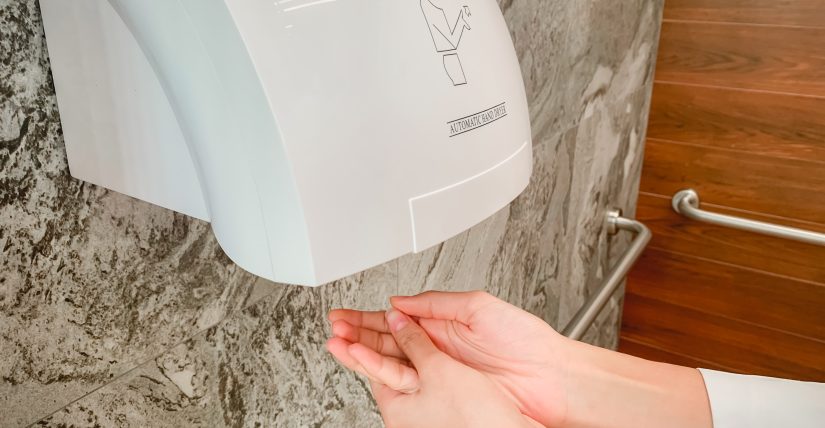
Commercial washrooms have evolved significantly over the past several decades. Once viewed primarily as functional spaces, modern washrooms are now considered an important part of the overall building experience. Facility managers, architects, and building owners increasingly recognize that washroom design can influence user satisfaction, operational efficiency, sustainability goals, and long-term maintenance costs.
As expectations for cleanliness, accessibility, and environmental responsibility continue to rise, hand dryers have become an increasingly important component of modern washroom design. Far more than a simple replacement for paper towels, today’s hand dryers support many of the priorities shaping contemporary commercial facilities.
One of the most important factors driving modern washroom design is efficiency. Building owners are continually looking for ways to improve operations while reducing ongoing costs. Traditional paper towel systems require regular restocking, storage space, waste collection, and disposal management. These recurring requirements can create additional labor demands and operational expenses over time.
Hand dryers help simplify washroom operations by eliminating the need for many disposable products. Once installed, they provide a consistent hand-drying solution without requiring the ongoing management associated with paper towel systems. This can help facility teams spend less time servicing washrooms while improving overall efficiency.
Sustainability has also become a major consideration in commercial building design. Organizations across industries are seeking opportunities to reduce waste and support broader environmental initiatives. Washrooms represent an area where small changes can contribute to larger sustainability goals.
By reducing reliance on disposable paper products, hand dryers can help minimize waste generation. Many organizations view paperless washrooms as part of a broader effort to reduce resource consumption and support environmentally conscious facility management practices. Modern hand dryer technology has also become increasingly energy efficient, allowing facilities to balance sustainability objectives with performance requirements.
Hygiene is another key priority in contemporary washroom environments. User expectations regarding cleanliness have increased significantly in recent years, particularly in public and high-traffic facilities. As a result, touch-free technologies have become increasingly common throughout commercial washrooms.
Automatic faucets, soap dispensers, flush valves, and hand dryers are now widely incorporated into modern designs. Touch-free hand dryers support these efforts by reducing the need for physical contact with shared surfaces. This creates a more seamless user experience while supporting overall hygiene objectives.
Space optimization is another important element of modern washroom planning. Architects and designers often work within limited square footage while attempting to maximize functionality and accessibility. Compact hand dryer solutions can help improve traffic flow and create a more efficient layout.
Many modern hand dryers are designed with space-saving profiles that allow them to fit comfortably within a variety of washroom configurations. Their ability to eliminate the need for paper towel dispensers and waste receptacles can also help reduce clutter and create a cleaner overall appearance.
Accessibility considerations are equally important. Commercial washrooms must accommodate users with varying mobility needs while complying with applicable accessibility requirements. Equipment placement and design play an important role in creating an inclusive environment. Many contemporary hand dryers are specifically engineered to support accessibility standards while maintaining performance and ease of use.
Aesthetics have also become a larger part of washroom design decisions. Businesses, hospitality venues, educational institutions, airports, healthcare facilities, and office buildings increasingly view washrooms as an extension of their brand and overall customer experience. Clean lines, modern finishes, and thoughtfully selected fixtures contribute to a more professional and welcoming environment.
Today’s hand dryers are available in a variety of styles and finishes that complement contemporary architectural designs. Rather than appearing as purely functional equipment, they can contribute to a cohesive and polished washroom appearance.
Reliability remains another important consideration. High-traffic facilities depend on equipment that can withstand frequent use while maintaining consistent performance. Airports, stadiums, schools, restaurants, office buildings, and transportation hubs all require washroom solutions capable of supporting large numbers of users throughout the day.
Modern hand dryers are engineered to provide dependable operation in demanding environments, helping facility managers reduce maintenance concerns and improve the overall user experience.
As commercial buildings continue to evolve, washroom design is becoming more closely aligned with broader organizational priorities such as sustainability, efficiency, accessibility, and user satisfaction. Hand dryers support each of these objectives by providing a practical solution that reduces waste, simplifies maintenance, improves hygiene, and complements contemporary design standards.
Ultimately, modern washroom design is about creating spaces that are functional, efficient, and responsive to changing user expectations. Hand dryers have become an important part of that evolution, helping facilities build washroom environments that support both operational goals and positive user experiences.



Leave A Comment